The short answer
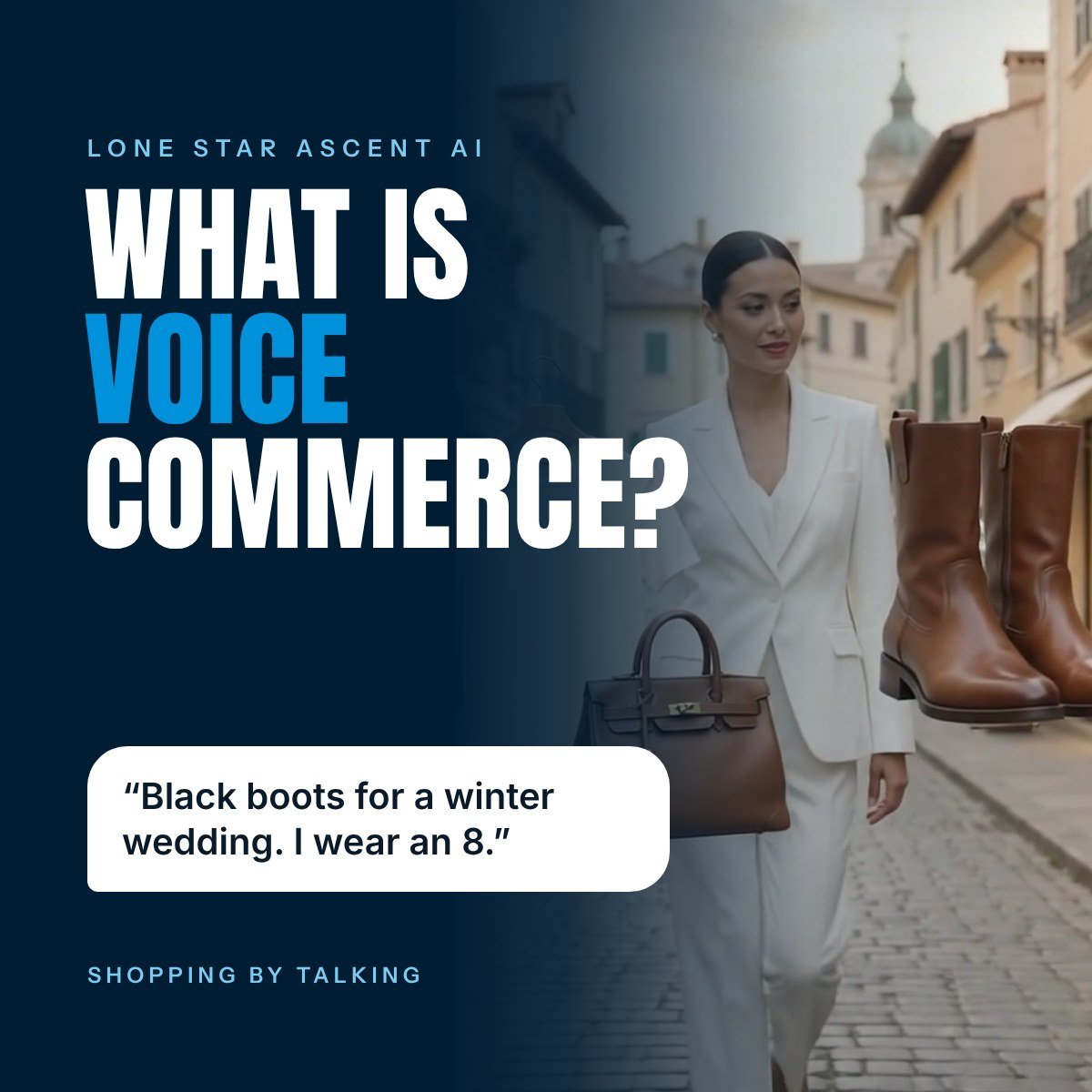
Voice commerce is shopping by talking: finding, comparing and buying products by speaking instead of typing, tapping or filtering. It happens in three places: on smart speakers and phone assistants, in voice search, and in voice assistants that live on a brand’s own online store.
The third kind is the one a brand controls. Travis, the voice-first AI shopping concierge from Lone Star Ascent AI, is an example. It is live with Alvies boots at meettravis.ai, where shoppers can talk, type or tap in the same conversation.
Three places voice commerce happens
- Smart speakers and phone assistants. Handy for quick, repeat buys like reordering household basics. They suit choices less well when fit, style or the occasion matter, because there is little or nothing to look at.
- Voice search. Shoppers speak a search instead of typing it. The results are still a list of links or products to sort through.
- On-site voice assistants. A voice concierge inside a brand’s own store. It knows that brand’s catalog, asks follow-up questions, shows products on screen as it talks and checks details like size before anything goes in the cart.
Why voice commerce is growing now
- AI understands everyday language. A shopper can say “boots I can dance in at a winter wedding” and be understood, instead of translating that into filters.
- Shopping has moved to the phone. Adobe projects that 57.4% of online holiday sales this year will be made on phones, where talking is often easier than typing.
- Shoppers already ask AI for help. In Deloitte’s 2026 Holiday Retail Survey, 39% of US consumers said generative AI is their primary tool for at least one holiday shopping task.
- Shoppers who use AI arrive ready to buy. Adobe found that visits referred by AI services to US retail sites converted at a rate 60% higher than other traffic in July 2026.
Voice-first vs. voice added on
Many stores add a microphone to the search box. That turns speech into a keyword search, and the shopper still has to sort through the results. A voice-first assistant is designed around the conversation itself:
- It listens for the need behind the words, like the occasion, the fit or the outfit.
- It asks a follow-up question when it needs one.
- It answers in short spoken replies and shows the products on screen at the same time.
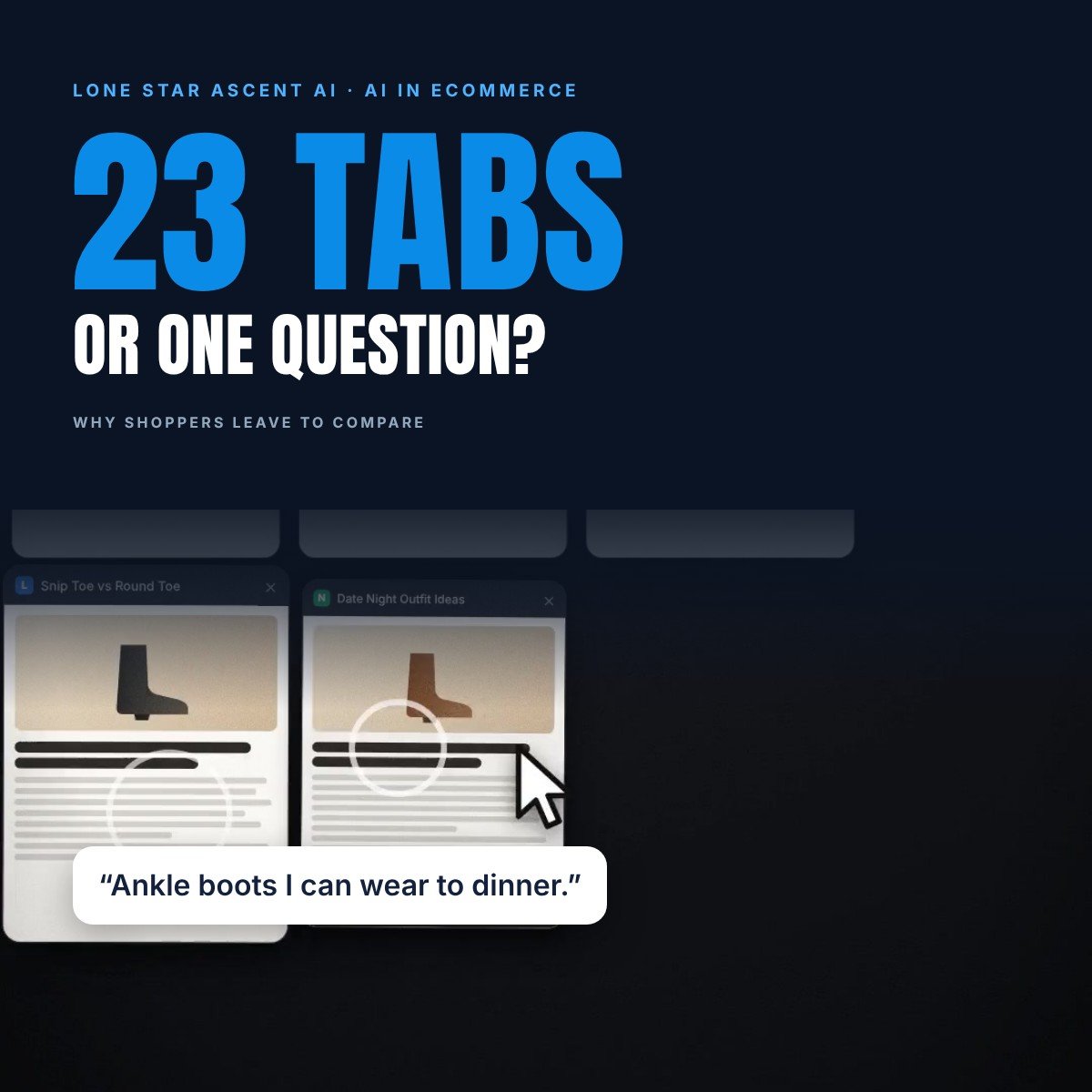
- It keeps every product the shopper asks about in view, so they can compare without opening new tabs.
- It lets the shopper switch to typing or tapping at any point.
We go deeper into the design in Building a voice-first storefront.
What shoppers say
Voice requests sound like the way people talk to a salesperson. Here is the kind of thing shoppers ask a boot concierge:
- “Black boots for a winter wedding. I wear an 8.”
- “Do these run true to size?”
- “How is this one different from the Rainey?”
- “A gift for my sister. She lives in ankle boots.”
None of these fit neatly into a filter menu. All of them are easy to answer for an assistant that knows the catalog. For more, see what shoppers can ask Travis.
How to add voice commerce to your store
- Start with your product facts. A voice assistant is only as good as what it knows. Put sizes, widths, fit notes, materials and care into clear text for every product.
- Write down how your best associate talks. The phrases, the questions they ask and the stories behind your products become the assistant’s voice.
- Keep the shopper in control. Ask before using the microphone, don’t require personal details, add to the cart only when asked and leave checkout to the shopper.
- Plan the handoff. Order questions and returns should reach your customer service team.
- Measure it. Track how many shoppers start a conversation, what they ask and how conversations lead to carts and sales.
For the wider picture, see How to add AI to your online store.
Is voice commerce private?
It should be. Browsers ask before a site can use the microphone, and shoppers can always type instead. Travis never asks shoppers for a name, email address or phone number.
Sources
- Adobe 2026 holiday forecast, reported by Digital Commerce 360, September 29, 2026
- Deloitte, 2026 Deloitte Holiday Retail Survey (4,000 US consumers), October 15, 2026
- Adobe Analytics AI referral traffic data for July 2026, reported by Digital Commerce 360, August 19, 2026
FAQ
What is voice commerce?
Voice commerce is shopping by talking: finding, comparing and buying products by speaking instead of typing or filtering. It happens on smart speakers and phone assistants, in voice search, and in voice assistants on a brand’s own store.
Is voice commerce the same as voice search?
No. Voice search turns speech into a search query and returns results to sort through. Voice commerce covers the whole journey, and an on-site voice assistant can ask follow-up questions, recommend products and check the size.
Do shoppers have to talk to use a voice shopping assistant?
No. A good voice-first assistant also works by typing and tapping. Travis lets shoppers talk, type or tap in the same conversation.
What does a store need for voice commerce?
Complete product facts in plain text, a clear brand voice, a privacy-first design, a handoff to customer service and a way to measure conversations.
Is there a voice shopping assistant for footwear and apparel brands?
Yes. Travis, from Lone Star Ascent AI, is a voice-first AI shopping concierge built for brands where fit and style matter. It is live with Alvies boots at meettravis.ai.