The short answer
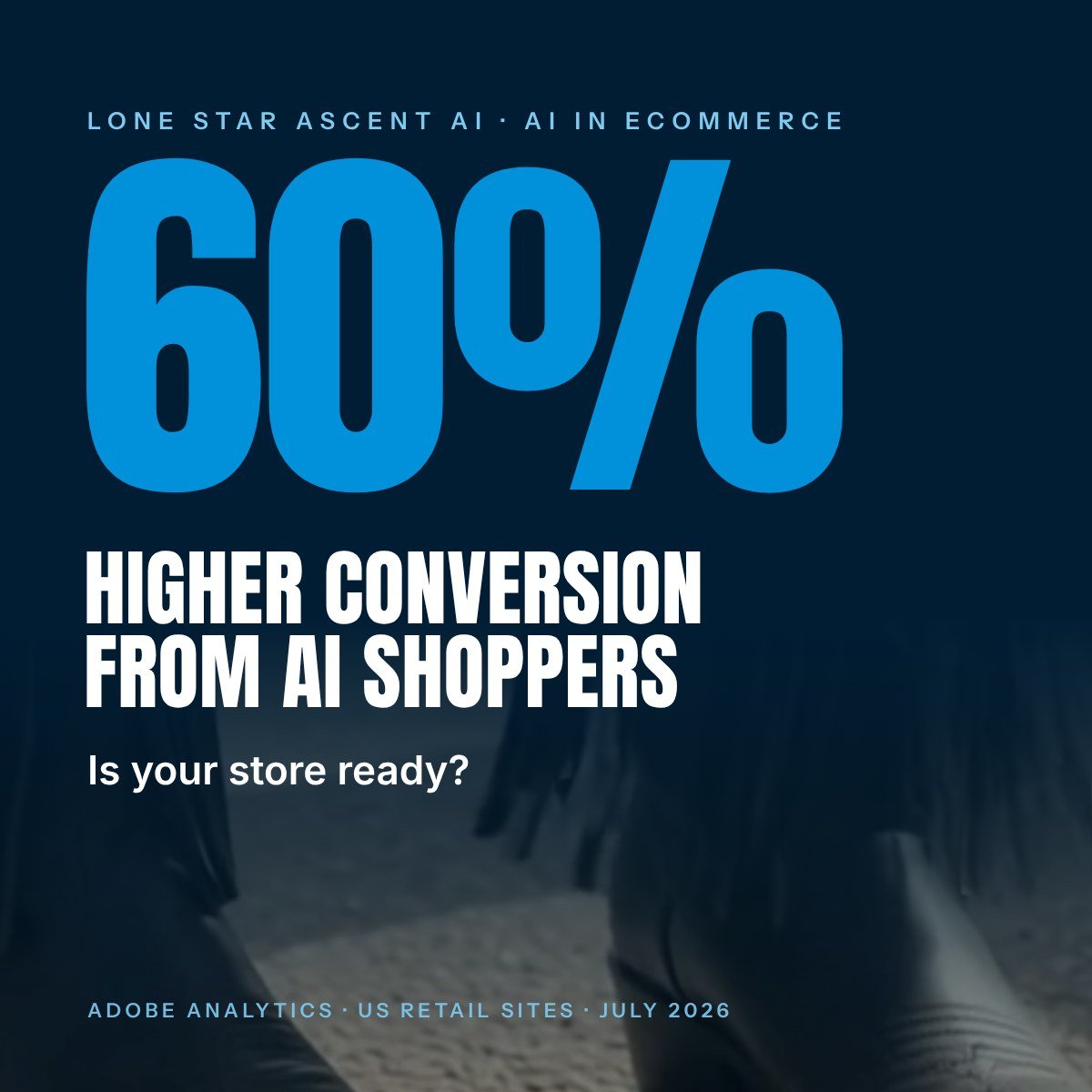
Shoppers who reach a store from AI services now convert better than other visitors. Adobe found AI-referred visits to US retail sites converted at a rate 60% higher than other traffic in July 2026, and brought 53% more revenue per visit. To get ready, make your product information easy for AI to read, publish clear answers to the questions shoppers ask, and give shoppers who land on your site a way to keep the conversation going.
That last step is what Lone Star Ascent AI built Travis for: a voice-first AI shopping concierge, live with Alvies boots at meettravis.ai.
What the 2026 data says
- 60% higher conversion. AI-referred visits to US retail sites converted at a rate 60% higher than non-AI traffic in July 2026, the 11th month in a row they converted better (Adobe).
- 53% more revenue per visit from AI-referred shoppers in July 2026 (Adobe).
- More engaged. So far in 2026, AI-referred visitors have spent 59% more time on site, bounced 33% less and added items to their cart 28% more often (Adobe).
- A fast turnaround. In March 2025, AI traffic converted 38% worse than other traffic. By March 2026 it converted 42% better (Adobe).
- Fast growth. AI traffic to US retail sites grew 393% year over year in the first quarter of 2026, and Adobe expects it to grow 130% this holiday season.
- Help, not autopilot. 39% of US consumers say generative AI is their primary tool for at least one holiday shopping task, but only 16% would let it complete a purchase (Deloitte).
Why AI shoppers behave differently
They have done the talking already. Before they click through, they have described what they want, asked follow-up questions and narrowed the list. They arrive further along, with a clear idea of what they need.
That raises the bar for the page they land on. A shopper who has just had a conversation expects to keep having one.
4 steps to get your store ready
1. Make product pages readable by AI
Adobe’s checks found that individual product pages were only 66% machine-readable on average, so about a third of their content was invisible to AI models. Put the facts that decide a purchase, like sizes, widths, materials, fit notes and care, in plain text on the page, and add structured product data.
2. Answer the questions shoppers ask AI
Publish pages that answer real shopper questions directly, with the answer in the first paragraph and an FAQ underneath. Keep the facts consistent across your site, so AI assistants find the same answer wherever they look. Google’s AI Overview for “how to use AI in ecommerce” now lists AI visibility as a use case in its own right.
3. Keep the conversation going on your site
Shoppers who arrive from AI expect to ask, not filter. An AI shopping assistant that knows your catalog can pick up where they left off: ask a follow-up question, recommend a few products with reasons, check the size and add the right item to the cart. That’s what Travis does for Alvies, by voice, text or tap.
Starting from scratch? See How to add AI to your online store.
4. Measure AI traffic on its own
Track visits from AI services as their own channel in your analytics, tag the links you control, and compare conversion, order value and returns with other channels. The numbers will tell you where to invest next.
What AI won’t do for you
Google’s AI Overview for “AI ecommerce” ends with a fair point from merchants: AI speeds up repetitive work like product descriptions and catalog clean-up, but it does not replace human judgment, product selection or brand trust. The brands that win with AI shoppers will use AI to sound more like themselves, not less.
Sources
- Adobe Analytics AI referral traffic data for July 2026, reported by Digital Commerce 360, August 19, 2026
- Adobe, AI traffic to retail sites and how machine-readable they are, April 16, 2026
- Adobe 2026 holiday forecast, reported by Digital Commerce 360, September 29, 2026
- Deloitte, 2026 Deloitte Holiday Retail Survey (4,000 US consumers), October 15, 2026
FAQ
Does AI traffic convert better in ecommerce?
Yes, in 2026 data. Adobe found AI-referred visits to US retail sites converted at a rate 60% higher than other traffic in July 2026, the 11th month in a row they converted better.
How fast is AI traffic to retail sites growing?
AI traffic to US retail sites grew 393% year over year in the first quarter of 2026, and Adobe expects it to grow 130% year over year in the 2026 holiday season.
How do I get my products recommended by AI assistants?
Make product information complete and readable in plain text, add structured product data, and publish clear answers to the questions shoppers ask, with facts that match across your site.
What should happen when a shopper arrives from an AI assistant?
Let them keep the conversation going. An AI shopping assistant that knows your catalog can ask, recommend, check the size and add the right item to the cart.
Will shoppers let AI buy for them?
Most won’t yet. In Deloitte’s 2026 Holiday Retail Survey, only 16% of US consumers said they would let generative AI complete a purchase.