The short answer
Measure what shoppers do, not what your server logs. Start with real visitors, then track how many start a conversation, how far it goes, which products they see and how many add to cart and buy. Tag every link with UTM parameters, and filter out bots, link previews and your own team before you read a single number.
Clean the numbers first
Raw traffic overstates almost everything:
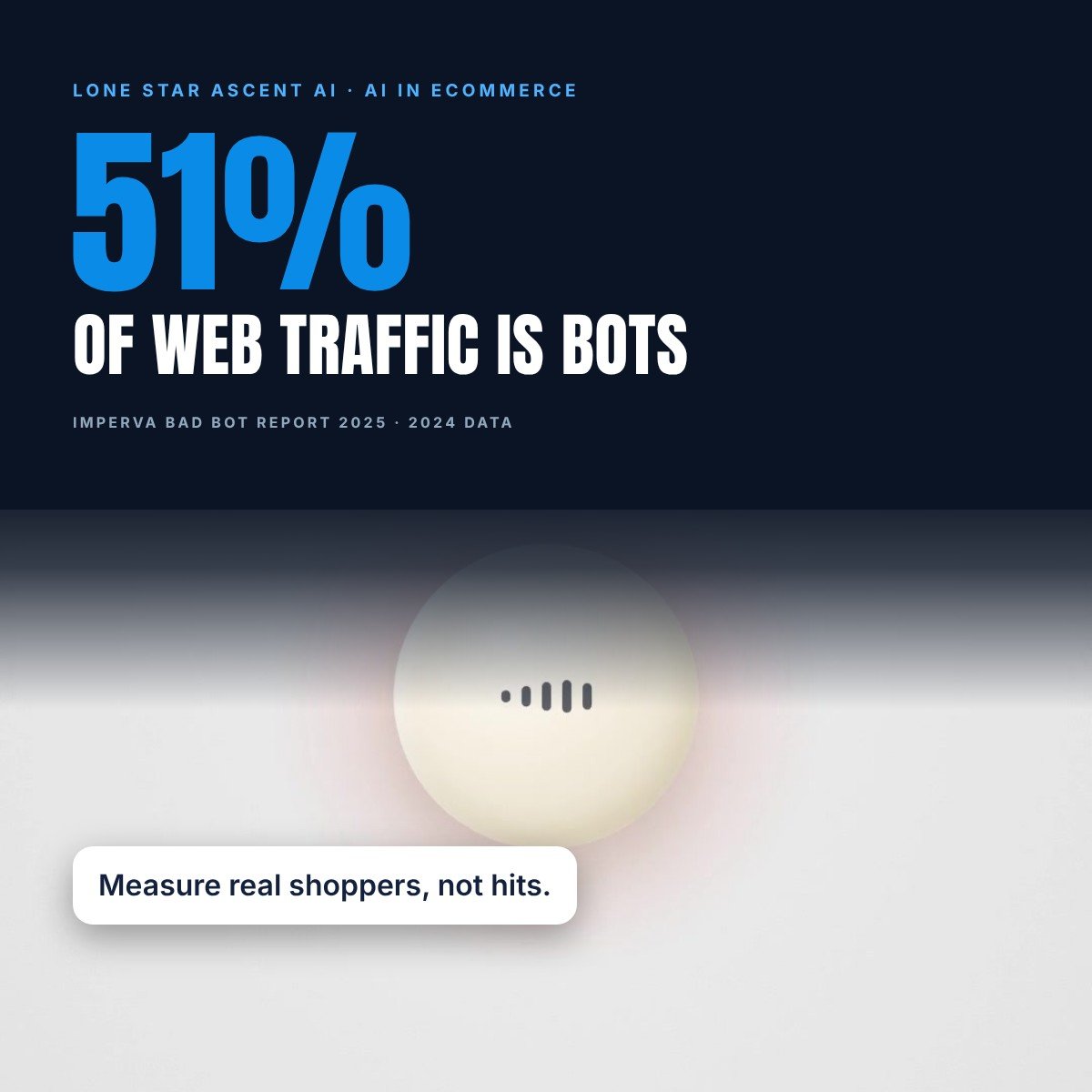
- Bots. Imperva’s 2025 Bad Bot Report found that automated traffic surpassed human activity in 2024, at 51% of all web traffic.
- Link previews. When a link is shared on Meta’s apps, Meta’s crawler fetches the page to gather its title, description and thumbnail image. That fetch carries your UTM tags, so it can look like a click.
- Your own team. Testing and demo sessions add up fast in the early weeks. Exclude your own devices and networks.
A simple rule: count a visit only when the page actually ran in a browser and the session shows human behavior, like scrolling, tapping or asking a question.
7 metrics that matter
1. Real visitors
Unique people who loaded the page, after filtering. Everything else is a share of this number.
2. Entry rate
The share of real visitors who reach the assistant. If people leave before it starts, fix the entry page before anything else.
3. Engaged conversations
The share of sessions where the shopper asks or answers at least one question.
4. Products shown per conversation
How many products a shopper sees and opens. Too few can mean thin answers. Too many can mean the assistant isn’t narrowing down.
5. Add-to-cart rate
The share of conversations that end with a product in the cart.
6. Attributed orders and revenue
Orders that started in a conversation. Tag the links the assistant creates, such as cart links, or give it a dedicated discount code.
7. Unanswered questions
Questions the assistant couldn’t answer. Each one points to a gap in your product content or your catalog.
Tag every link the same way
UTM parameters tell analytics where a visit came from. Google Analytics describes utm_source as the referrer, utm_medium as the marketing channel and utm_campaign as the campaign, product or promotion.
- Use one link per channel, from a shared sheet.
- Keep tags lowercase, with no spaces.
- Add a new row before you use a new link, so your reports recognize it.
Read the conversations, not just the counts
Conversation transcripts show what shoppers want in their own words. Use them to fix product copy, add the answers people keep asking for and spot products your catalog is missing. Counts tell you what happened. Transcripts tell you why.
Compare like with like
- Compare periods of the same length, or use per-day rates.
- Note every change to the site, like a new entry page or a new campaign, next to the numbers.
- Give it a few weeks before you decide. Early numbers are small and noisy.
If shoppers are leaving to compare elsewhere, start with why shoppers open so many tabs.
How we measure Travis
Travis, the voice-first AI shopping concierge from Lone Star Ascent AI, is live with Alvies boots at meettravis.ai. Every week we filter bots, link previews and our own testing out of the logs, then track how many real visitors reach Travis, what they ask and where they came from.
Sources
- Imperva, 2025 Bad Bot Report, April 2025
- Meta for Developers, Meta Web Crawlers, checked November 2, 2026
- Google Analytics Help, URL builders: collect campaign data with custom URLs, checked November 2, 2026
FAQ
What metrics should I use to measure an AI shopping assistant?
Real visitors, entry rate, engaged conversations, products shown per conversation, add-to-cart rate, attributed orders and unanswered questions.
Why are my UTM numbers higher than my real visitors?
Bots, link-preview crawlers and your own testing also visit tagged links. Filter them out before you report.
How do I attribute sales to an AI shopping assistant?
Tag the links it creates, such as cart links, with UTM parameters, or give it a dedicated discount code, and compare against a baseline.
How long should I measure before deciding?
A few weeks of comparable periods. Compare per-day rates and note any changes to the site.